How to Cook · Pan-Frying
Rösti
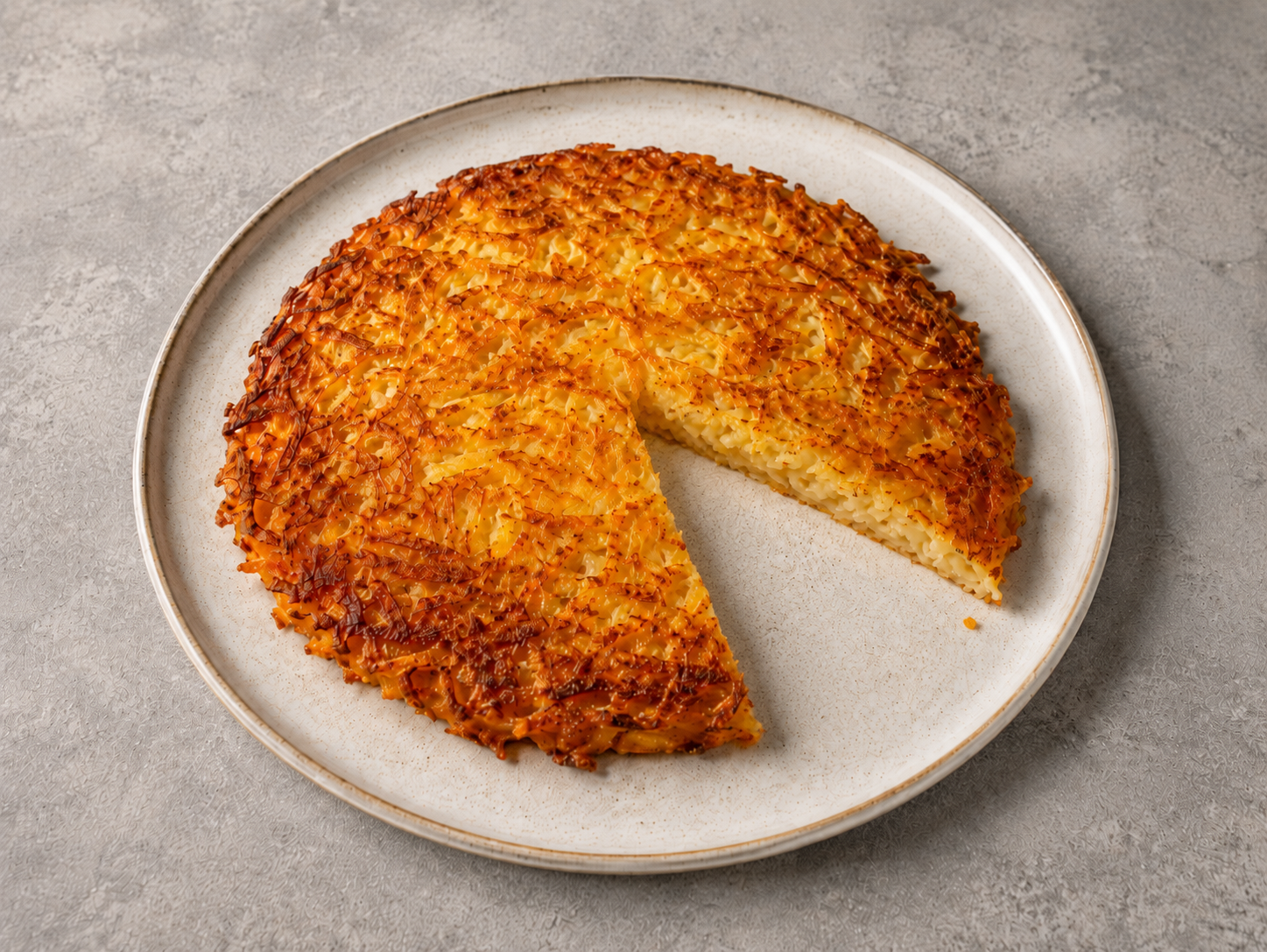
A Swiss potato cake of grated potato pressed into a pan and fried in fat until it sets into one crisp, golden round, cut into wedges to serve. It's essentially a tidier hash brown, and the secret to its crackly crust and tender inside is the same either way: wring as much water as possible out of the raw potato before it hits the pan.
Serves 4
Ingredients
Pan-Frying
Method
One thing makes or breaks a rösti: moisture. Grated raw potato holds a surprising amount of water, and water is the enemy of crispness — it steams the potato instead of browning it. So the whole method is built around getting that water out before the potato ever hits the pan: grate, salt, wait, and squeeze.
Grate and squeeze dry
Grate the potatoes on the large holes of a box grater, toss with a good pinch of salt, and let sit 10 minutes — the salt pulls water out of the potato. Wrap the grated potato in a clean kitchen towel and wring it out hard over the sink, getting rid of as much water as you can; this is the single most important step.
Fry into a cake
Heat the fat in a skillet (nonstick or well-seasoned cast iron) over medium heat until it shimmers, add the potato, and press it into an even cake with a spatula. Cook undisturbed until the underside is deeply golden and crisp, 6–8 minutes — don't rush it or push it around, it needs the time to set into a cake and release from the pan on its own. Flip the whole cake — slide it onto a plate and invert it back into the pan if that's easier — add a little more fat, and crisp the second side, another 5–7 minutes. Season with salt and pepper and cut into wedges.
The pattern holds even across very different foods: dry the surface, season well, get real heat into the pan, and don't move things around more than you have to. Meat wants repeated flipping to cook evenly; fish wants to be left alone and flipped once. Either way, what's left in the pan when the protein comes out is never wasted — it's the beginning of a sauce.
Part of Pan-Frying in the How to Cook series.